.png?width=2000&height=675&name=2023%20ALN_standard-red%20(3).png "All Learners Network logo")

In our recent discussion around Math Menu feedback, we explored how to make student growth visible without drowning in paperwork. A natural next step in that journey is asking: Once we have the evidence, how do we plan small group interventions that actually move the needle?
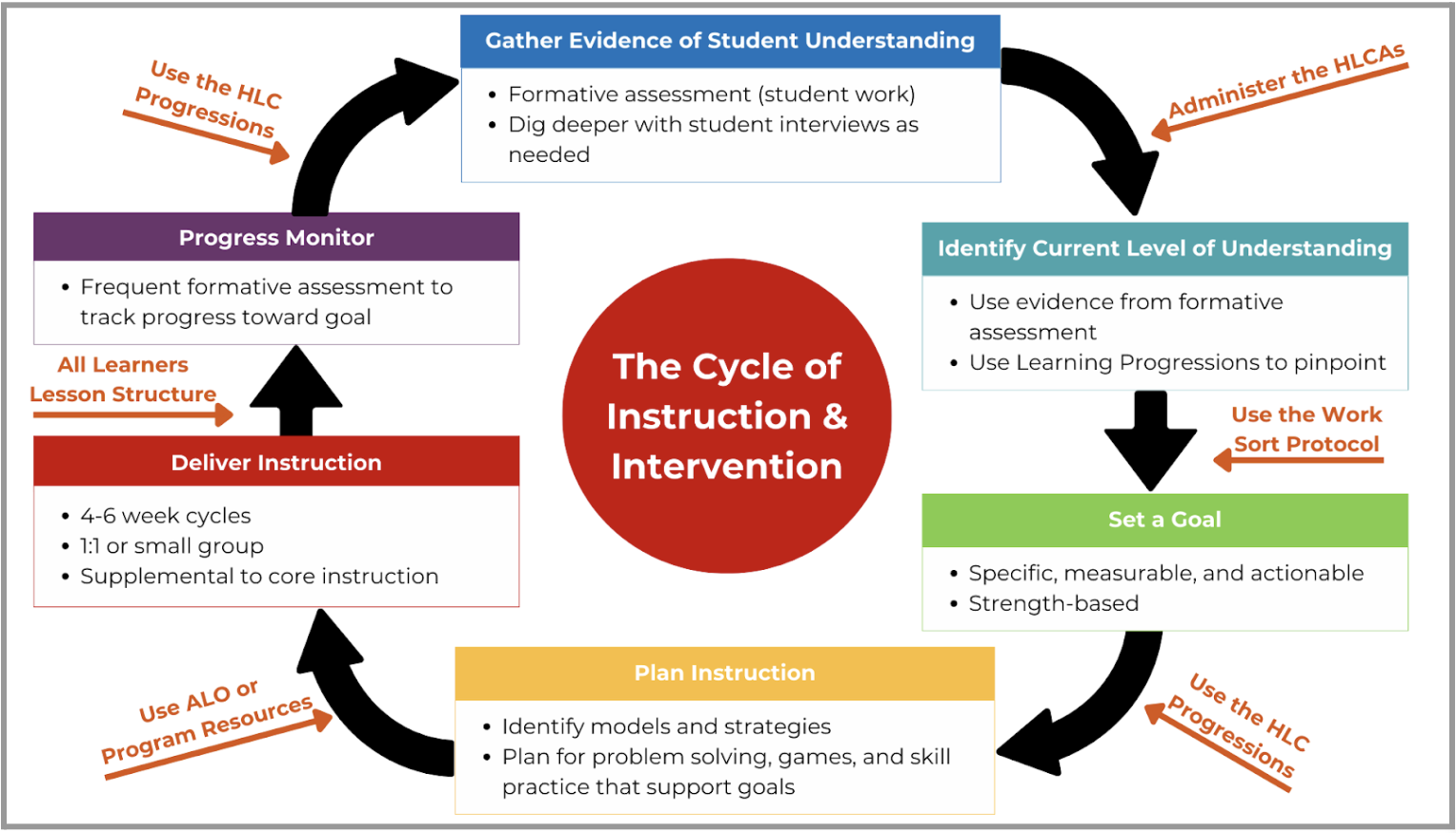
It is important to think of this work as a cycle rather than a linear process. When planning for small group instruction, we aren’t just trying to get a student from point A to point B. We don’t want to set a goal for the year and just work toward it broadly, hoping that an end of year assessment will show proficiency. Even when we have a larger goal, like an IEP goal, we need to set smaller goals along the way to work through this cycle of continual gathering of evidence, exploring theories, instruction, and progress monitoring.
Often, traditional intervention can feel like louder and slower repetitions of the main lesson, focused on rote practice and unclear goals. To disrupt the systemic barriers that prevent equitable access to high-quality math, we need a different approach - one that is strength-based, focused on conceptual understanding, and, most importantly, manageable for the teacher.
Here is how you can structure your small group planning using the All Learners Network (ALN) cycle of instruction and intervention.
1. Set a Clear, Manageable Goal
The foundation of a successful 3 to 6 week intervention cycle is a specific, actionable goal. We use the ALN High Leverage Concepts (HLCs)–the key mathematical understandings that all students need to engage with grade level content the following year–to create a pathway for all students to be successful in Algebra. The HLCs provide an opportunity for us to pinpoint exactly where a student is on the learning progression toward understanding the most critical mathematics at each grade level. When we set goals for students, we focus on student strengths and then plan the next step for instruction based on the High Leverage Concepts Progressions (HLCPs).
For example, if a 6th-grade goal is using ratio tables to solve problems, a targeted intervention goal might be: "I can use an additive approach to build ratio tables of equivalent ratios". By narrowing the focus, you make the instruction more potent and the progress easier to track.
2. Plan Engaging, Low-Floor/High-Ceiling Activities
Intervention time should feel relaxed and engaging for our students. We recommend a 30-minute block designed to build mathematical insight through joy and reasoning.
A sample 30-minute session might look like this:
- Launch (5-10 mins): Use a Number Sense Routine like "Which One Doesn't Belong?" to spark discourse.
- Problem Solver or Game (15 mins): Engage students with high quality games that have a strong focus on math content. Games are particularly effective because they offer students a low-risk opportunity to explore mathematics and allow for "leveling up" with manipulatives or increased number complexity as students grow.
- Closure (5 mins): Briefly reflect on the strategies used during the session.

A Manageable Approach to Math Menu Feedback

The Power of “Adjust Your Thinking”: Reclaiming Adaptive Reasoning in Mathematics Classrooms



No Comments Yet
Let us know what you think